





F.A.Q.
Leather Chokers — Handcrafted Statement Neck Accessories
A choker does something other accessories don't. It anchors the neckline, pulls focus upward, and adds a layer of intentionality that changes the entire read of an outfit. Not a finishing touch — a starting point.
At restrict, we've been crafting leather pieces since 2015. Every choker in this collection is handmade in Kyiv from premium leather, built for people who wear things with purpose.
What Makes a Leather Choker Different
Fabric chokers stretch and soften. Metal chains move and catch. Leather holds.
A well-made leather choker has structure — it sits exactly where you put it, keeps its shape over time, and develops a character with wear that no other material replicates. The surface breaks in subtly. The edges stay clean. The piece looks better at six months than it did on day one.
That's the core reason leather became the material of choice for neck accessories that are meant to last. It's not nostalgia for a 90s trend. It's a functional decision that also happens to look exactly right.
Two Directions, One Collection
Flat Chokers — Minimal and Versatile
The flat choker is the most adaptable piece in a wardrobe. A single band of leather, sitting close to the skin — clean enough to wear with almost anything, distinct enough to carry a look on its own.
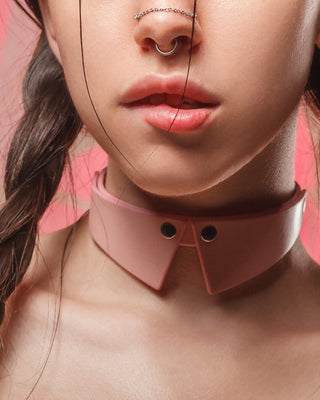
Within this category, the designs at restrict range from completely stripped-back bands to pieces with subtle structural details: a slight twist, a wider collar-style profile, a metal-plated surface, a small decorative cutout. The silhouette stays close to the neck. The presence varies by model.
These are the everyday pieces — the ones that pair with a neckline, layer under a jacket, or pull a minimal outfit into focus.
Posture Collars — Structured and Intentional
A posture collar is a different kind of statement. Taller, firmer, and architecturally distinct from a standard choker, it frames the neck rather than circling it. The structure is built into the leather itself — no boning, no padding, just precise construction that holds its form.
These pieces are for moments when you want the accessory to lead. Editorial looks, event dressing, or any time the neck becomes the focal point of the outfit. The visual weight is significant. The craftsmanship is what makes it wearable rather than theatrical.
How to Style a Leather Choker
The most common mistake with leather chokers is treating them like a casual add-on. They work better when the rest of the outfit is considered around them.
With a bare neckline — the simplest and most effective pairing. A low-cut or off-shoulder top lets the choker read clearly without competition.
Over a turtleneck — a flat band sitting just above the collar creates a layered effect that works particularly well in autumn and winter dressing.
With a structured jacket — a wider collar-style choker worn with an open blazer turns a basic layering piece into something with real intention.
As the only accessory — leather carries enough visual weight that stacking rarely improves anything. Let the choker be the piece.
Sizing and Fit
Fit is the difference between a choker that looks right and one that doesn't. Too loose and it shifts; too tight and it reads as uncomfortable rather than precise.
Most restrict chokers include an adjustable closure with a few centimeters of range. That said, starting with the correct base size matters. Before ordering, check the Size Chart on the website — it lists the recommended neck circumference for each model so the piece sits exactly where it should.
If you're between sizes, size up. A choker that sits slightly lower can still look intentional. One that's too tight cannot be adjusted down.
Leather Care — What You Actually Need to Know
Premium leather is durable, but it responds to how you treat it.
Keep the choker away from prolonged water exposure — occasional rain won't damage it, but submerging it will. Store it flat or hanging, never folded or compressed, which can crease the surface permanently. Every few months, apply a small amount of leather conditioner if the surface starts to feel dry.
Done consistently, this takes less than five minutes and extends the life of the piece by years. Full guidance is available on the Storage and Care page.